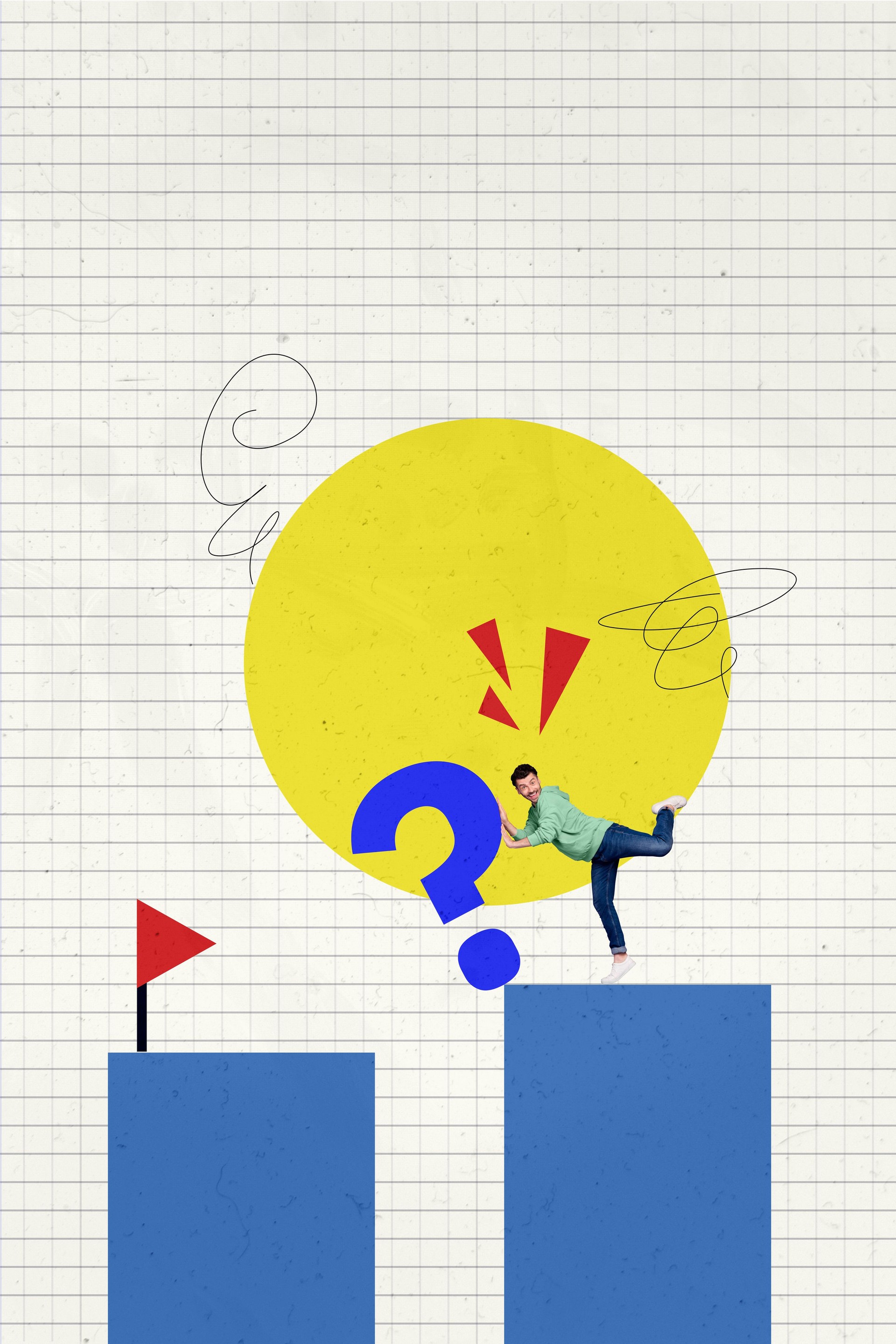
Uncertain pathways ahead
By the time you reach this space, the university no longer feels anchored to a single center.
What once appeared stable now feels negotiated. Stories shift. Ground moves. Authority feels less certain. And at the heart of it all sits a question that refuses to settle: what counts as knowledge, and who gets to decide?
You have already encountered pieces of this question along the way. At the doorway, you saw how stories shape what is recognized as legitimate learning. Beneath the campus, you felt how land itself holds knowledge that institutions rarely acknowledge. In the archive, you noticed how silence determines which histories are preserved and which disappear. In the hall of apologies, you saw how recognition can be offered without surrendering authority. In the room of entanglement, you sat with the discomfort of benefiting from systems even as you question them.
Here, those threads tighten.
The future of higher education is being pulled toward an abyss where competing claims collide. Artificial intelligence presents itself as a new knowledge holder, fast, scalable, confident, and increasingly authoritative. Climate crisis demands that lived experience, emotion, and uncertainty be treated as knowledge, not distractions. Market logics insist that knowledge must prove its value through efficiency, productivity, and return. Movements for justice insist that knowledge cannot be separated from responsibility, relationship, and repair.
Each force speaks with urgency.
Each claims legitimacy.
Each asks to be heard on its own terms.
And the university is left negotiating not only what to teach, but whose knowledge it trusts.
The holder of knowledge is no longer fixed. It shifts between professor, student, algorithm, community, institution, land, and data. Authority moves, sometimes uneasily, sometimes without consent. What was once protected by credentials now competes with platforms, metrics, and machines. What was once dismissed as subjective demands recognition as essential. What was once unquestioned must now justify itself repeatedly.
This constant movement unsettles the institution. It also unsettles those within it.
Who do we listen to when knowledge is no longer singular?
How do we assess learning when expertise is distributed and unstable?
What happens when legitimacy is claimed from multiple directions at once?
The abyss is not only about competing futures. It is about competing truths. Each pulling, each demanding recognition, each asking for the right to define reality as it sees fit.
This page does not attempt to stabilize that tension.
Instead, it asks what responsibility looks like when certainty is no longer available. When authority must be shared. When knowledge must be held lightly, not as possession, but as relationship.
The future of higher education will not be decided by resolving these tensions once and for all. It will be shaped by how institutions respond to this ongoing instability. By whether they cling to fixed hierarchies of knowledge or learn to live with shifting grounds. By whether legitimacy is guarded or negotiated with care.
As you leave this space, there is no final holder of knowledge waiting to receive the answer.
Only an ongoing negotiation.
Only a responsibility to stay attentive.
Only a future still under construction.